
Stand on a Denver street after one of our spring squalls and you can hear the soft ticking of cooling roofs, the last raindrops, and, if you listen closely, the rattle of a loose chimney cap somewhere up the block. That small sound hints at a big job: keeping the top of your chimney sealed against weather, wildlife, and embers without choking the draft that keeps smoke moving in the right direction. In our climate of fierce sun, sudden hail, and energetic winds, metal caps carry a heavy workload. When they loosen, corrode, or go missing entirely, the flue becomes a funnel for problems. That is why timely, well-executed chimney repair focused on caps is one of the smartest maintenance steps a homeowner can take—quiet work that prevents loud problems later.
A good cap does several things at once. It sheds rain, blocks hail from plunging directly into the flue, deters birds and small animals, and acts as a spark arrestor to reduce the risk of stray embers. It must perform all of that while letting flue gases flow freely. In Denver, where winds can shift direction mid-gust, the way a cap sits relative to rooflines and nearby structures also matters; a crooked or undersized cap can generate turbulence that weakens draft. The best setups look simple but are the product of careful sizing, sound attachment, and the right metal for the job.
Common Problems with Metal Chimney Caps
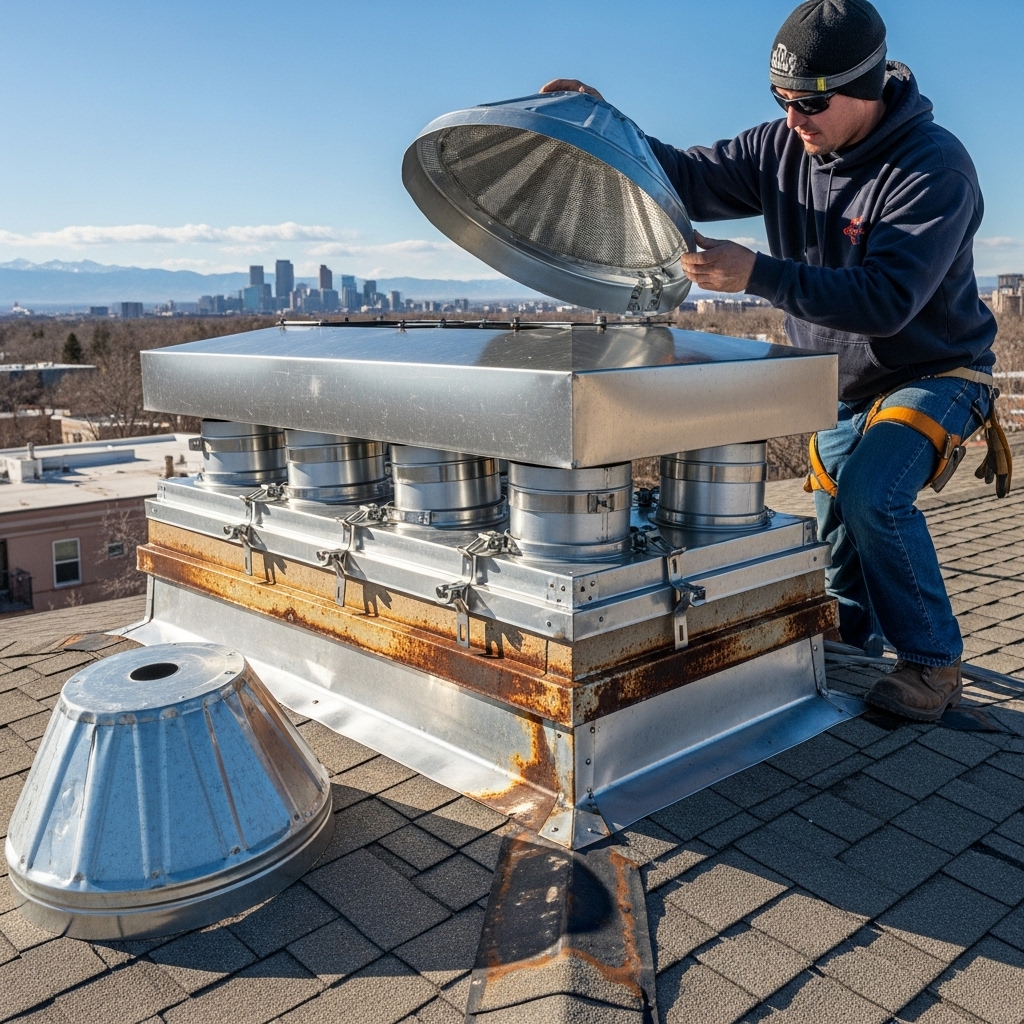
We see familiar patterns in our work. Galvanized caps often age into rust, their seams weakening first, followed by the mesh that keeps critters out. Stainless caps resist corrosion far better but can still be bent by larger hailstones or pried loose by wind if the fastening is inadequate. Bent mesh is more than a cosmetic blemish—it can collect creosote in wood-burning systems or clog with lint and debris on smaller vents, choking airflow. A cap that rattles may have loose screws or shifting brackets, and over time that movement widens holes and invites leaks.
Another issue is mismatch. Multi-flue chimneys sometimes wear a cap sized for a single flue, leaving other tiles exposed or trapping moisture under an oversized lid. Poorly designed caps with flat, close-fitting lids can create condensation on cool mornings, dripping water back into the flue. In winter, ice build-up around a restricted mesh can slow draft right when you need it most. Good design is preventative medicine—choose the right profile and you avoid many of these pitfalls from the start.
Choosing Materials that Thrive in Denver’s Climate
Stainless steel is the workhorse material for caps here. It stands up to UV exposure, resists corrosion, and takes the occasional hail hit without rusting afterward. Thicker gauges, reinforced corners, and welded seams offer added resilience. Copper is beautiful and durable, weathering into a warm patina that suits certain homes, but it must be secured with care because it is softer than stainless. Galvanized steel remains an economical option for short-term fixes, yet it rarely wins for longevity under our intense sun and hail.
Mesh size matters as well. Spark arrestor mesh commonly ranges from 3/4-inch to 5/8-inch. Smaller openings catch embers but can load up with creosote faster on wood systems. We match mesh to appliance type and burning habits, balancing safety with airflow. For gas systems, corrosion-resistant components are essential, because the mildly acidic condensate in flue gases can attack lesser metals over time.
Assessment: From Rattle to Root Cause
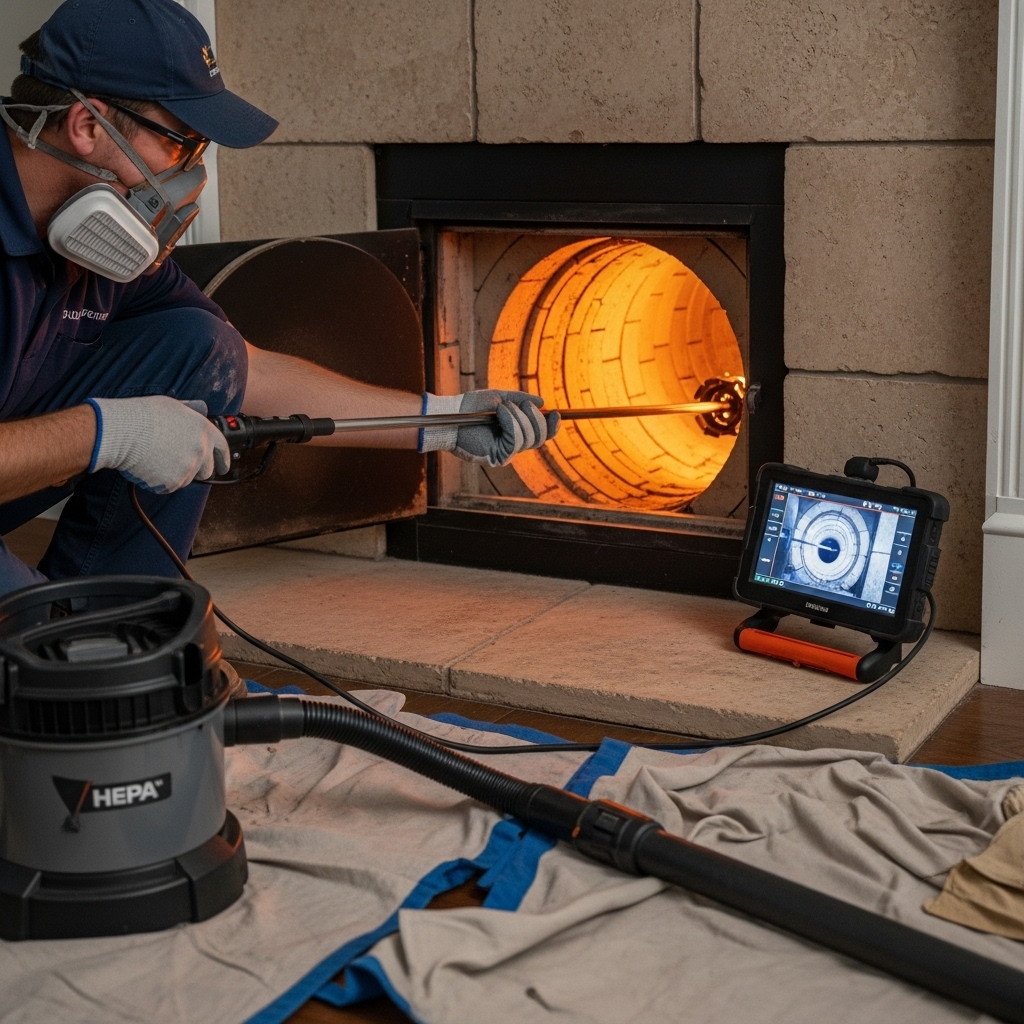
Good repairs start with good diagnostics. We begin with a rooftop look at the cap itself—its seating, fasteners, and seals. Then we trace outward: the crown condition, the flue tile edges, and the flashing where the chimney meets the roof. If hail has recently visited, we check for impact marks and screen deformation. The flue interior may be viewed with a light or camera, especially if water intrusion is suspected. When caps go missing or are severely damaged, soot patterns inside the flue often tell the tale of how long the problem has been present.
We also observe how wind behaves around the chimney. Nearby ridges, neighboring houses, and even large trees can bend air currents in surprising ways. A cap that looks correct on paper might draft poorly in practice if it sits too low or too close to a wind eddy. Adjustments to height or the use of a different profile can make a real difference in performance.
Repair or Replace? Making the Right Call
Not every damaged cap needs to be replaced. Loose brackets can be tightened or upgraded, deformed mesh can sometimes be swapped, and minor hail dents that don’t affect function may be left alone. However, when corrosion has set into seams or the frame is twisted, replacement is the safer path. A compromised cap is like a loose lid on a jar—you can set it straight for a moment, but the next gust will show the weakness.
When replacement is on the table, we measure carefully. Single-flue caps must fit snugly to the tile with proper clamping or anchor points. Multi-flue caps are custom-sized to cover all tiles with adequate clearance and a lid height that supports draft. We ensure that fasteners penetrate solid material and are sealed against water. The result is a cap that becomes part of the chimney, not an accessory waiting to fly away.
Installation Details that Matter
The best materials won’t save a poor installation. We square the cap to the flue, set the lid with the correct stand-off, and ensure the mesh transitions cleanly to the base without sharp edges that invite debris. Sealants, if used, are chosen for temperature tolerance and UV stability. Where caps interface with irregular stone or uneven crown surfaces, custom bases or shims provide a close fit without stress points that lead to cracks. These details are quiet, but they are what allow a cap to do its job in a February wind or an August hailstorm.
For homes with wood-burning fireplaces, we think ahead about creosote. Certain cap designs collect soot more readily, and that can be fine if cleaning is easy. We select profiles with accessible mesh and lids that can be removed without dismantling the entire assembly, making maintenance straightforward and less likely to be deferred.
Integration with the Whole Chimney System
A cap is only as effective as the crown it sits on and the flue it protects. If a crown is cracked, we address that surface to prevent water from wicking under the cap base. If flue tiles are chipped at the top course, we dress the edges or install a protective collar so that clamping forces don’t worsen the damage. For chimneys serving gas appliances, we verify the cap and mesh do not restrict the lower-pressure exhaust, and we confirm that any required termination standards are met. Integration prevents a strong cap from masking weaknesses below it.
Midway in many projects, homeowners want to know which choice will best stand up to our weather for years to come. The answer is a combination of heavy-gauge stainless construction, proper height above the flue for airflow, and secure anchoring into solid material. Pair those with a tuned crown surface and you have a quiet, reliable top assembly. That’s the essence of preventive chimney repair in cap form—small details that avert big headaches.
Seasonal Maintenance and Watchpoints
Twice-yearly visual checks are often enough for caps in Denver. After hail season, look for dents, shifted lids, or distorted mesh. Before winter, verify that screens are clear of soot and that fasteners are still tight. Wood-burning homeowners may need more frequent cleaning depending on use and wood quality. If you hear rattling in wind or see birds taking an interest, don’t wait—those are early warnings that attention is due.
It’s also wise to keep an eye on surrounding roof conditions. A cap can be perfect while flashing nearby has loosened, allowing moisture to find its way toward the crown. Coordinating roof and chimney maintenance pays off because water is opportunistic, and the top of the house is a single system in the eyes of a storm.
Frequently Asked Questions About Chimney Caps
How do I know if my chimney cap needs repair or replacement?
Visible rust, rattling in the wind, bent mesh, or a crooked lid are strong indicators. If water spots appear in the firebox or you notice downdrafts that weren’t present before, a cap issue may be part of the cause. A rooftop inspection gives the definitive answer.
Can I operate my fireplace without a cap for a short period?
It’s risky. Without a cap, rain and debris can enter the flue, and animals may attempt to nest. Even a few days of exposure can lead to moisture problems, particularly if another storm rolls through. A temporary cover installed by a professional is a safer bridge to a proper cap.
Which metal is best for a chimney cap in Denver?
Stainless steel offers the best balance of strength and corrosion resistance for our climate. Copper is durable and attractive but softer, requiring careful fastening. Galvanized steel can work as a short-term measure but tends to degrade faster under intense sun and hail.
Will a new cap improve my draft?
A well-designed cap won’t fix fundamental drafting issues, but it can stabilize airflow by reducing turbulence and preventing wind-driven downdrafts. Correct sizing and lid height are critical to avoid restricting the flue.
Why does my cap make noise during windstorms?
Rattling usually means loose fasteners or a lid that is flexing. In some cases, wind eddies around nearby rooflines can buffet a cap that’s otherwise secure. Reinforcement and, occasionally, a profile change can quiet things down.
Can hail damage to a cap affect safety?
Yes. A dented or displaced cap can let water in, distort mesh, or obstruct the flue. Water intrusion can crack tiles or corrode liners, and restricted mesh can impair draft. Prompt assessment keeps small impacts from becoming bigger problems.
How often should I clean the mesh on a wood-burning system?
It depends on how much and what you burn. Many homeowners do well with a pre-winter cleaning and a mid-season check, especially if fires are frequent. Easy-access cap designs encourage regular care, which keeps draft steady and reduces soot smells.
If your cap is rattling, rusting, or gone with the wind, addressing it now is a quiet win for your home’s safety and comfort. We size, secure, and finish caps to fit your chimney, your appliance, and Denver’s weather patterns, so the top of your system does its job without fanfare. When you’re ready to put worries to rest with durable, well-fitted protection, schedule expert chimney repair and let your chimney breathe easy through every season.