
Denver’s skyline tells a story of contrasts: century-old brick homes line leafy neighborhoods while glass-fronted commercial buildings and bustling restaurants anchor busy corridors. That same diversity shows up inside our chimneys and vents. Residential hearths, restaurant exhausts, multifamily boiler flues, and commercial fireplaces all live under the same mountain weather and high-altitude sky, but they demand different strategies, different tools, and different rhythms of care. If you’re weighing options for residential or commercial service, this deep dive unpacks how each setting is approached, where they overlap, and how a seasoned Denver team keeps both homes and businesses running safely and smoothly. Whether you’re planning routine chimney cleaning or a full venting program across multiple properties, understanding the context helps you get better results.
At a glance, a living room fireplace and a restaurant’s solid-fuel oven might look like distant cousins. In practice, they share foundational principles—clean, unobstructed passageways for exhaust, adequate combustion air, and protection from weather and wildlife. But the cadence and complexity of service change dramatically across settings. Residential care prioritizes home cleanliness, comfort, and education. Commercial care emphasizes uptime, documentation, and coordination with facility operations, fire marshals, and sometimes insurance carriers.
Residential service: the Denver home perspective
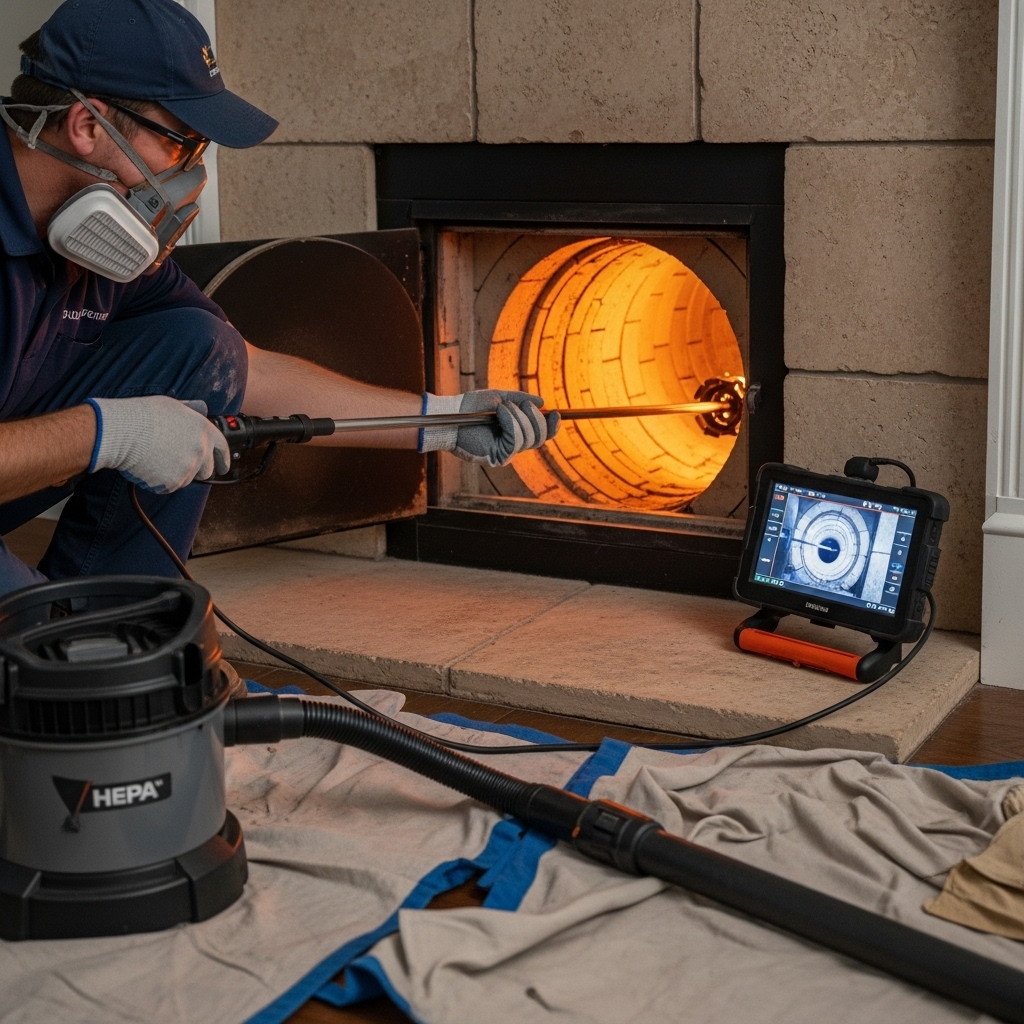
In homes along the Front Range, a typical visit starts with interior protection and a conversation. Has your fireplace been smoky at startup? Do you hear wind noise at the cap? Any signs of moisture after storms? Those clues guide the approach. Equipment is staged carefully on drop cloths, and HEPA filtration is positioned to capture fine particulates. From there, the technician assesses the firebox or appliance, damper, smoke chamber, and flue, with attention to the chimney crown or chase cover, cap, and flashing above the roofline.
Denver’s altitude and weather shape the service plan. Draft can be sensitive to windy afternoons and cold morning inversions. Homes with tight building envelopes or big kitchen hoods may experience negative pressure that pulls against the fireplace. The solution can be as simple as adjusting burn technique or adding makeup air during startup. The homeowner education piece is one of the most valuable parts of a good appointment, empowering you to get cleaner, easier starts and better overall performance.
If the home features a stove or insert, technicians evaluate gaskets, baffles, and clearances. Gas units are checked for vent integrity, debris, and correct operation. In all cases, the goal is to leave the system clean, documented, and ready for the next cozy evening—without ash spread through the living room.
Commercial service: restaurants, multifamily, and offices
Commercial environments bring larger scale, heavier use, and regulatory layers. Think of a wood-fired pizza oven that runs from lunch through late night, or a hotel lobby fireplace that sets the ambiance every evening. These systems accumulate deposits faster, and access logistics can be more complex. Crews often work during off-hours to avoid interrupting service or guest experiences, coordinating with managers for elevator access, roof keys, and site-specific safety rules.
Documentation takes center stage. Commercial clients typically need written reports, photos, and, when requested, logs that confirm cleaning intervals and any noted deficiencies. Coordination with local fire officials or third-party inspectors may be part of the workflow. For multifamily buildings and boiler rooms, technicians navigate shared roofs, mechanical spaces, and routing through occupied areas, always with an eye on safety and minimal disruption.
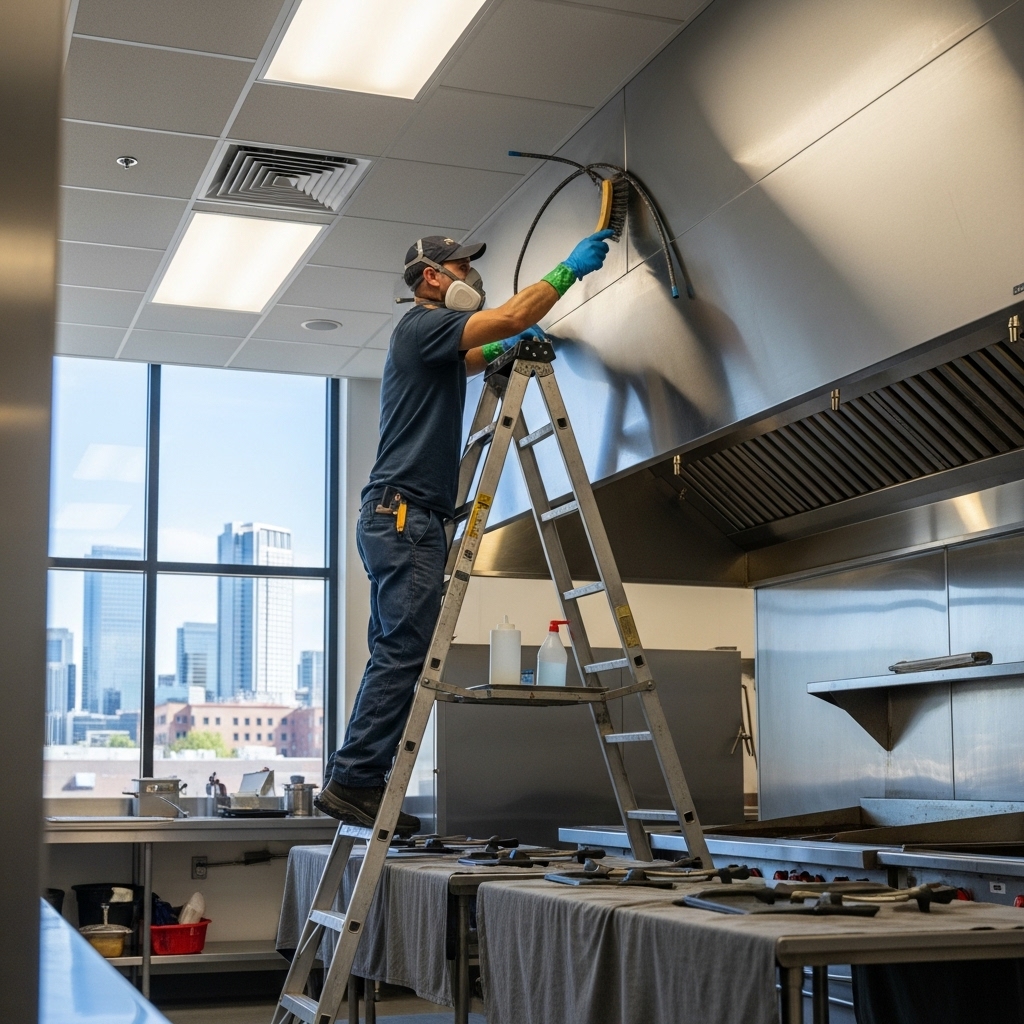
Restaurant systems, in particular, see intense heat and heavy smoke production. Components like spark arrestor screens, termination caps, and flue sections are inspected for warping, clogging, or grease and soot accumulation. The cleaning method and cadence are matched to real-world usage, and schedules are often set on a repeating cycle to keep operations predictable and compliant.
Where residential and commercial overlap
Despite different scales, the fundamentals of good service remain the same. Both settings require containment to protect interiors, proper brushing and vacuuming to remove deposits, and a trained eye to spot wear, moisture ingress, or wildlife intrusion. Both benefit from informed recommendations and clear communication. And both are shaped by Denver’s climate—freeze-thaw cycles that stress masonry, gusty afternoons that challenge caps and screens, and seasonal swings that change how systems draft.
The Denver perspective also means thinking ahead to shoulder seasons. For homeowners, that might be an early-summer appointment before calendars fill. For businesses, it often means aligning service around seasonal traffic, maintenance windows, or scheduled equipment shutdowns. A responsive local partner helps map those rhythms so your fireplace or flue is always ready when you need it.
Tools, techniques, and training
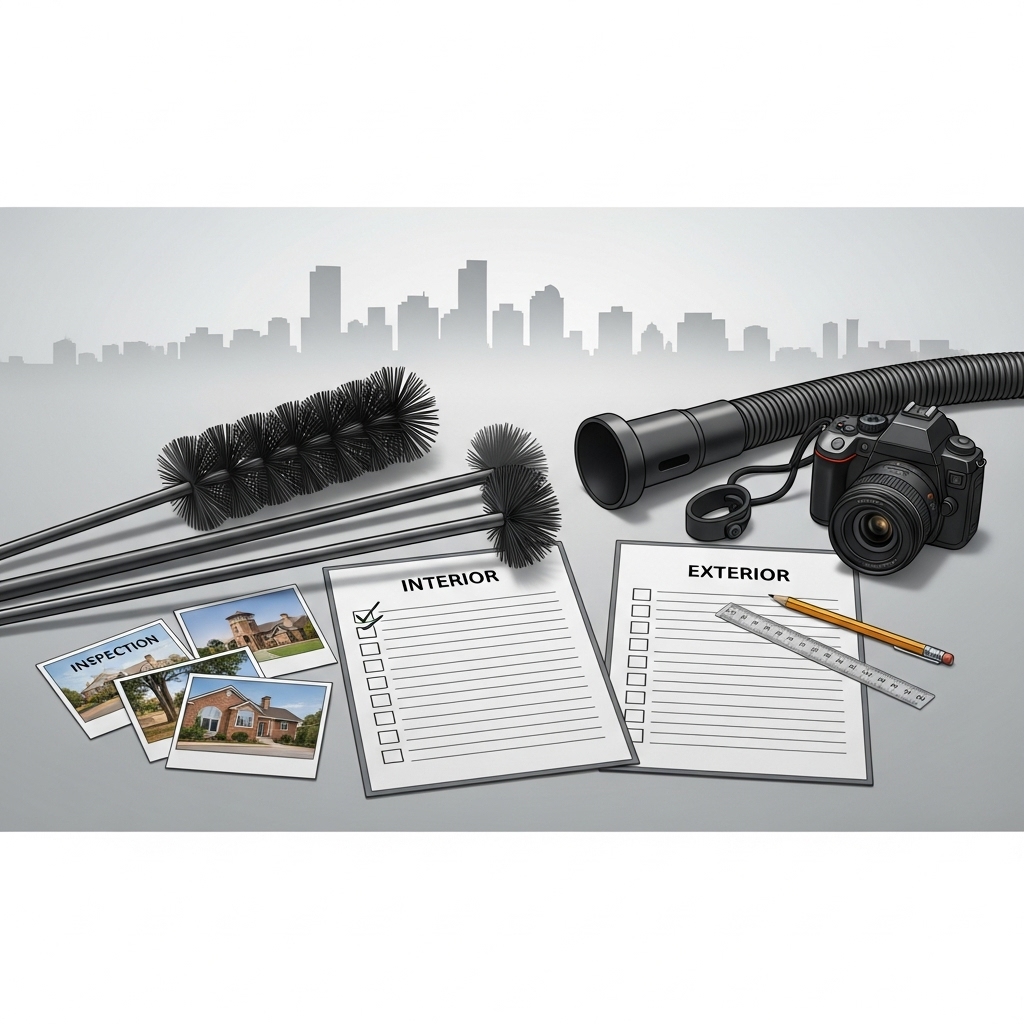
Modern chimney care uses a mix of time-tested and high-tech tools. Flexible rods and appropriately sized brush heads remain essential, but they’re paired with HEPA vacuums, specialized rotary systems for stubborn deposits, and camera equipment for inspections and documentation. In commercial contexts, access equipment may include lift systems, roof anchors, and lockout-tagout procedures in mechanical rooms.
Training is the throughline. Field technicians blend code familiarity, manufacturer guidance, and hands-on problem-solving. They recognize the differences between masonry and factory-built systems, understand when to recommend additional evaluations, and know how to protect finished interiors and busy workspaces. A culture of safety—and a habit of tidy, respectful work—helps the team move efficiently without cutting corners.
Communication that keeps projects smooth
For a homeowner, good communication might look like a quick call before arrival, a clear explanation of what was found, and photos to document conditions. For a property manager, it might include a scope of work ahead of time, certificates of insurance on file, and a wrap-up summary that highlights any follow-up needs. In both cases, transparency is key. You should know what’s being done, why it matters, and how to keep the system performing between visits.
Scheduling follows the same principle. Residential visits can often be set within a convenient window, and commercial service is arranged around business operations. Flexibility matters when Denver’s weather throws a curveball. The right team communicates proactively and adjusts safely when wind or ice make roof access impractical.
Midpoint planning: building your maintenance rhythm
The middle of the service cycle is a natural time to plan ahead. Once residues have been addressed and the system is drafting the way it should, consider how frequently you use the fireplace, oven, or boiler. For households that burn most winter evenings, annual inspections are a smart baseline. For businesses with steady usage, a more frequent rhythm may be appropriate. Aligning your schedule with your real-world patterns keeps performance steady and helps you avoid last-minute scrambles when the temperature drops. If you’re mapping out your next chimney cleaning, this is the moment to put the date on the calendar while the details are fresh.
Denver details that matter
Wildlife loves warm, protected spaces. Without a cap in good condition, birds and small mammals can turn flues into short-term housing. Freeze-thaw cycles stress crowns and mortar joints, which can introduce moisture and eventually staining or flaking. High UV exposure on the Front Range can age exterior metal components faster than you might expect. A local team knows these patterns and checks accordingly, preventing small issues from growing into larger headaches.
Inside, modern homes often have tight building envelopes, improving efficiency but changing how air moves. Big range hoods and bath fans can pull against fireplaces. Thoughtful burn practices and, when needed, small adjustments to how a space is ventilated can make a world of difference.
What to expect at the end of a visit
Residential clients can expect a tidy hearth, a clear explanation of findings, and, if applicable, images that document the condition of the flue and exterior. Commercial clients receive a summary suitable for maintenance records, plus any recommendations prioritized by urgency. In both settings, the system is left ready for safe operation, and you’ll know when it makes sense to check in again.
FAQ
How often should homes and businesses schedule service?
Homes typically benefit from annual inspections, with cleaning performed as needed. Businesses that burn daily or operate solid-fuel equipment usually require more frequent attention based on usage and compliance needs.
Can service happen during business hours?
It can, but many commercial clients prefer off-hours to minimize disruptions. Residential visits are commonly scheduled during daytime windows, coordinated with homeowners’ availability.
Do gas units need attention too?
Yes. Gas appliances still rely on venting that can be affected by debris, nesting, or age. Regular checks ensure safe operation and confirm that vents are unobstructed.
Will my living room or workspace get dusty?
With proper containment and HEPA filtration, dust is controlled. Protecting interiors—homes and businesses alike—is a core part of professional service.
What if weather makes roof access unsafe?
Safety comes first. Crews will adjust the plan and return for roof work as soon as conditions allow, communicating clearly about any changes.
Ready to plan your next step?
The right Denver partner brings local know-how, respectful workmanship, and clear communication to every setting—home or business. If you’re ready to schedule your next chimney cleaning or build a maintenance plan that fits your needs, reach out today. We’ll help you choose a convenient time, prepare your space, and keep your system running safely all season long.