
When neighbors in Denver ask how much they should plan for a chimney appointment, what they usually want is a trustworthy roadmap rather than a number pulled out of thin air. After years working from Park Hill to Littleton and into the foothills, I can tell you that the most accurate answer comes from understanding your system, your usage, and the unique conditions we face at altitude. The goal here is to explain the variables that shape the scope of work, the process you can expect on service day, and the long-term value of partnering with a local professional. If you’re getting ready to schedule chimney cleaning, this guide will help you make sense of the moving parts and plan with confidence.
Let’s begin with the basics. A service appointment has two core missions: remove combustible deposits and verify that the venting system is clear, continuous, and protected from the elements. On the practical side, that translates to thorough brushing and vacuuming paired with a careful inspection from firebox to termination. Done right, your living space stays clean, your system drafts better, and you walk away with a clear picture of your chimney’s condition.
Why Denver’s environment matters
Denver’s elevation changes how fires behave and how flues draft. Thin air reduces oxygen density, so colder starts can feel sluggish until the flue warms. Wind exposure varies widely neighborhood to neighborhood; a tall home on a ridge may need different attention at the cap than a bungalow tucked into a sheltered block. Freeze-thaw cycles are rough on masonry, and sun exposure can age metal components. These realities shape both how often you should schedule service and what a thorough appointment includes.
We also see a wide range of fuel choices. Some households burn seasoned hardwood nightly during cold snaps, while others enjoy a handful of fires around the holidays. A gas log set might flicker for ambiance in a downtown condo lobby, as opposed to a woodstove that heats a mountain-adjacent home. All of these patterns influence how residues form and how a technician approaches the job.
The appointment, step by step
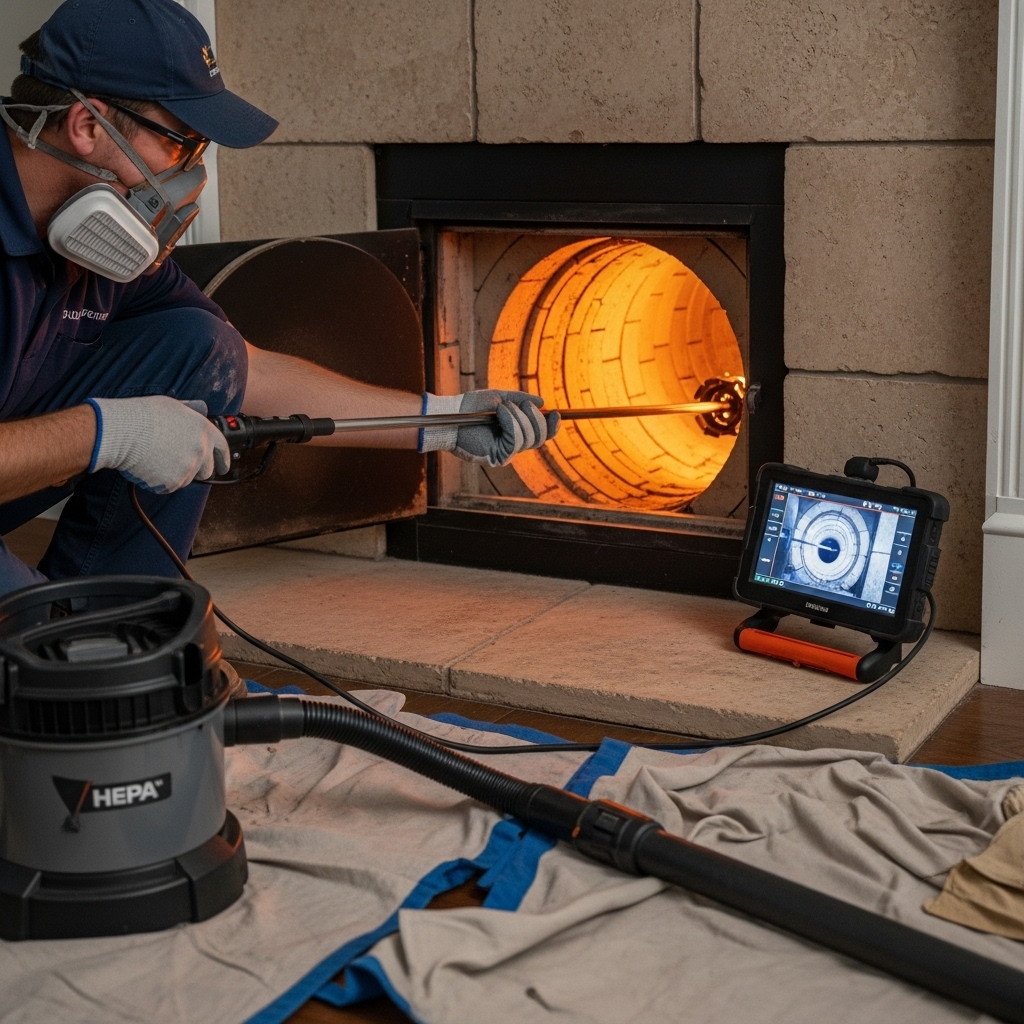
When the crew arrives, they’ll protect your floors and furnishings with clean drop cloths and set up HEPA filtration to capture fine particulates. The initial walkthrough includes questions about how your system has been performing—any smoky starts, odd odors, or rattles when the wind picks up. From there, the technician checks the firebox or appliance, damper, smoke chamber, and accessible portions of the flue. If roof access is safe, the team inspects the cap, crown or chase cover, and flashing, noting any weathering or wildlife activity.
Brushing uses sized tools matched to your flue type—masonry clay tiles, stainless liners, or factory-built systems—so that residues are removed without damage. As deposits are dislodged, a controlled vacuum collects them at the base, keeping the room clean. The service may include camera imaging to document interior conditions, especially useful for older homes or systems with offsets.
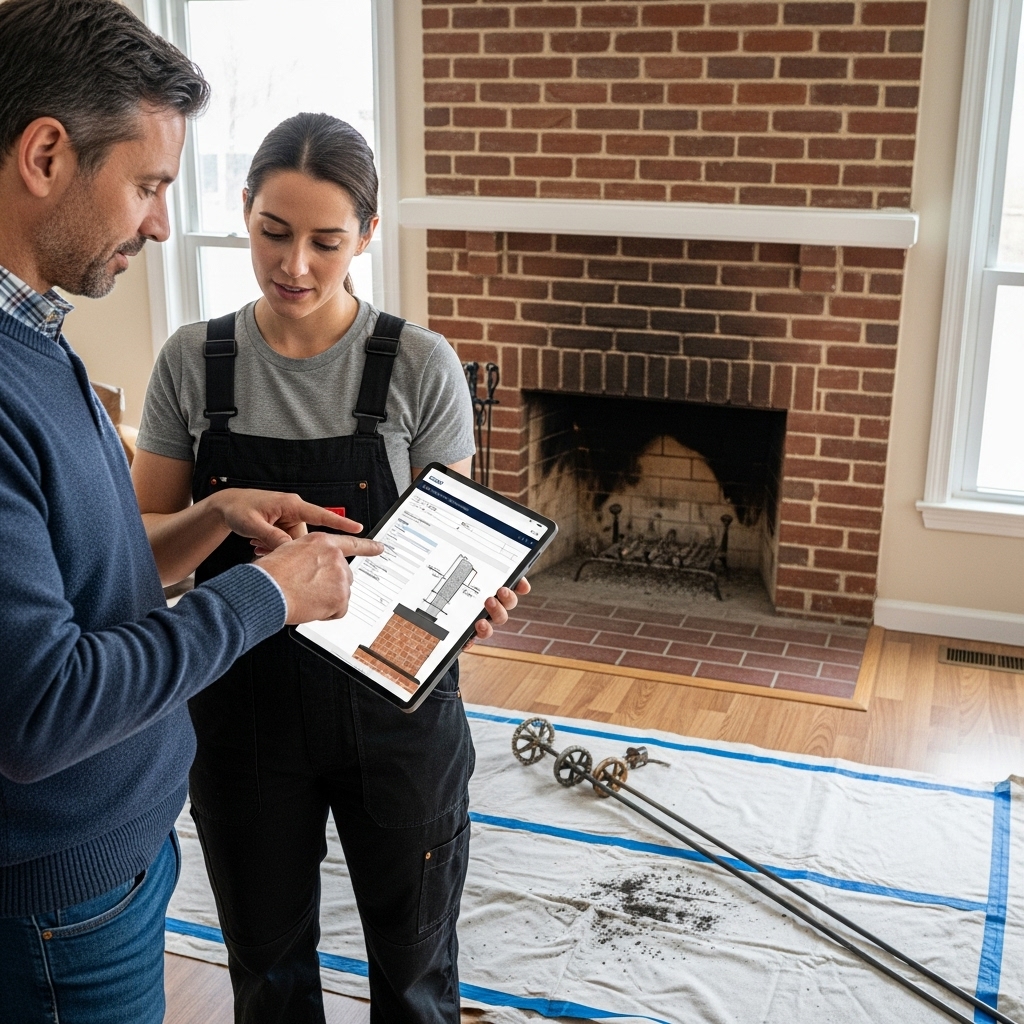
By the end, you should have a clear sense of what was done, what was found, and any recommended follow-up. Good documentation makes planning easy and gives you a baseline to compare next season.
Variables that shape the scope of work
Design and height matter. A straight, interior masonry flue behaves differently than a tall, exterior stack with offsets. Access can also influence the plan; steep roofs, fragile tiles, or icy conditions may require adjustments. The condition of the flue—how much and what type of residue has accumulated—guides tool selection and time on task.
Appliance type adds another layer. Stoves and inserts have gaskets, baffles, and connector pipes that need attention. Factory-built fireplaces have specific clearances and components to inspect. Gas units, while generally cleaner, still require vent checks to ensure unobstructed, intact pathways. Each system has its own service profile, and a trained technician recognizes the differences quickly.
Usage patterns matter too. A home that burns nightly in January will accumulate residues differently than a home that lights a few holiday fires. Shoulder-season smoldering—those low, smoky fires meant to take the edge off—can produce sticky deposits in the smoke chamber and the upper flue. Understanding your habits helps tailor service intervals and burn recommendations.
Denver nuances: wind, wildlife, and weather
It’s not unusual to find nesting materials at the cap after a quiet spring, or to see screens partially blocked by sticky residues when winds have been pushing smoke back down the flue. Crowns and chase covers take a beating from sun and hail, and flashing can loosen in strong gusts. These exterior details are checked carefully because they determine how well your chimney sheds water and keeps critters out.
Inside the home, modern building practices make houses tighter. Large range hoods and whole-house fans can pull air from the room, affecting fireplace performance. A good technician will help you understand how to balance air pressure so your system drafts the way it should.
Value beyond a clean flue
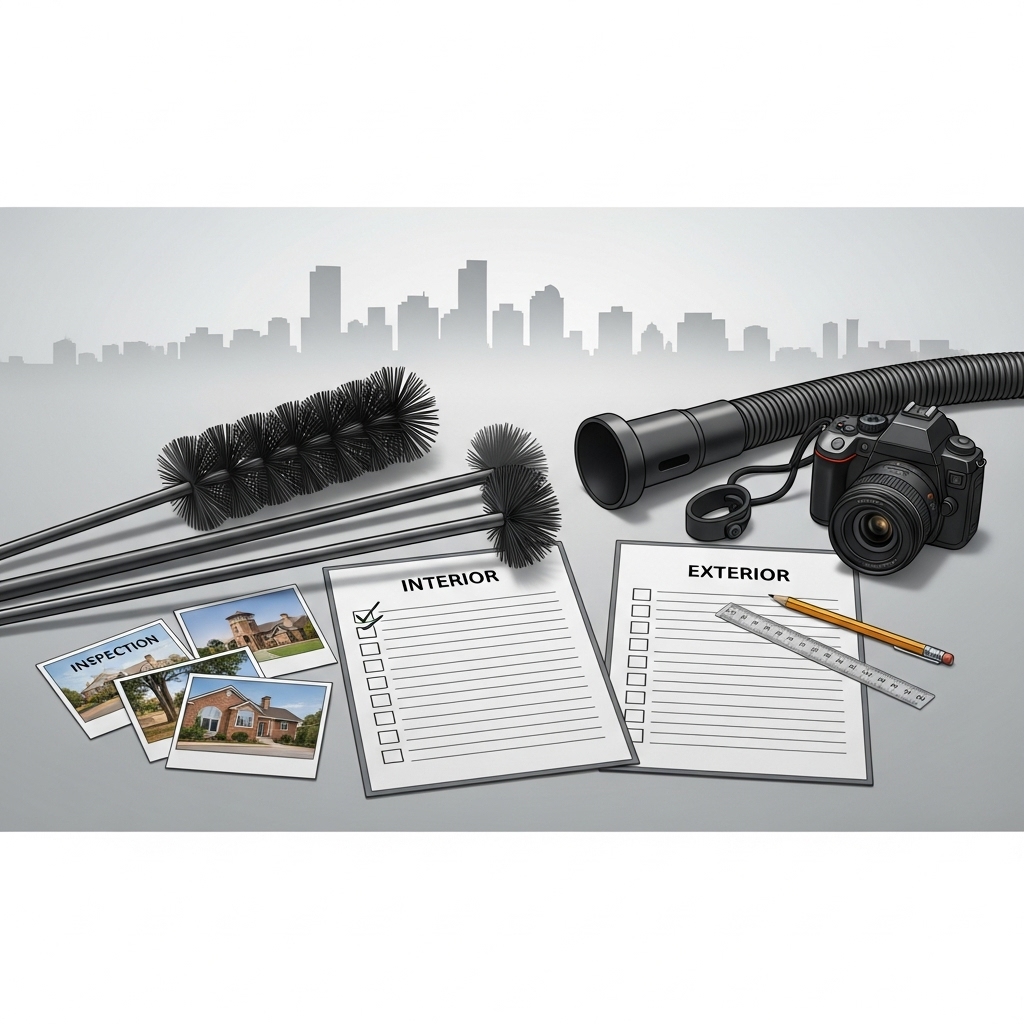
What do you gain from a well-executed appointment? First, peace of mind. Removal of combustible deposits reduces risk, and a careful inspection alerts you to developing issues while they are still manageable. Second, better performance. Fires start more easily, burn more evenly, and produce fewer odors when the pathway is clear and components are in good condition. Third, documentation. Photos and notes create a record that supports real estate transactions, remodels, or simply a tidy homeowner’s file.
Perhaps the most underrated benefit is education. A few practical tips about wood storage, startup technique, and managing airflow in our climate can transform your day-to-day experience at the hearth.
Midway planning: setting your rhythm
Once you’ve gone through a service cycle and seen how your system behaves after a thorough appointment, you’re in the perfect position to plan ahead. If you burn regularly in winter, make annual inspections your baseline and adjust from there. If your schedule is unpredictable, consider a shoulder-season visit before cold weather hits. Planning your next chimney cleaning while the details are fresh keeps you ahead of the rush and ensures the work aligns with your real-world usage.
Preparing for your appointment
Before the crew arrives, avoid burning for at least 24 hours so everything is cool. Move fragile items off the mantel, clear a path to the hearth, and plan a quiet spot for pets. If you’ve noticed unusual odors, wildlife activity, or moisture after storms, mention it when you schedule so the technician arrives with the right tools and a clear plan.
On service day, expect a tidy setup, clear explanations, and a step-by-step process that respects your home. If weather makes roof access unsafe, a reputable team will return as soon as conditions allow to finish the exterior portion.
Choosing the right Denver partner
Look for a team that blends local experience with strong craftsmanship. Ask about interior protection, HEPA filtration, and the documentation you’ll receive. Inquire about training, adherence to recognized standards, and how recommendations are prioritized. An outfit that communicates clearly and treats your home with care is worth its weight in firewood.
It’s also wise to consider scheduling habits. Local calendars fill quickly when the first cold front rolls down the foothills. If you like prime appointment windows, book before the rush and keep your maintenance rhythm consistent year to year.
Frequently asked questions
How often should I plan service in Denver?
Most households benefit from annual inspections, with cleaning performed as needed based on usage and burn habits. Our altitude and winter conditions can accelerate residue formation, so yearly checkups keep you ahead of surprises.
Do gas fireplaces require attention?
Yes. Gas appliances still produce byproducts and rely on intact, unobstructed venting. Regular checks confirm safe operation and catch developing issues early.
Will my home get dusty during service?
With proper containment and HEPA filtration, dust is well controlled. Protecting your interior is a core part of a professional workflow.
What if my roof is steep or icy?
Safety comes first. If roof access isn’t safe, the crew will adjust the plan and return for exterior checks as soon as conditions improve.
Can I use the fireplace the same day?
If all components are in good condition and the technician gives the all-clear, many homeowners can enjoy a fire later that day. Always wait for confirmation after the service is complete.
Your next step
From Wash Park bungalows to mountain-view lofts, Denver homes share one need: a venting system you can trust. When you’re ready to schedule your next chimney cleaning, choose a local team that values clear communication, tidy workmanship, and thorough documentation. Reach out today to pick a convenient window, ask your questions, and set your home up for a safe, comfortable season.