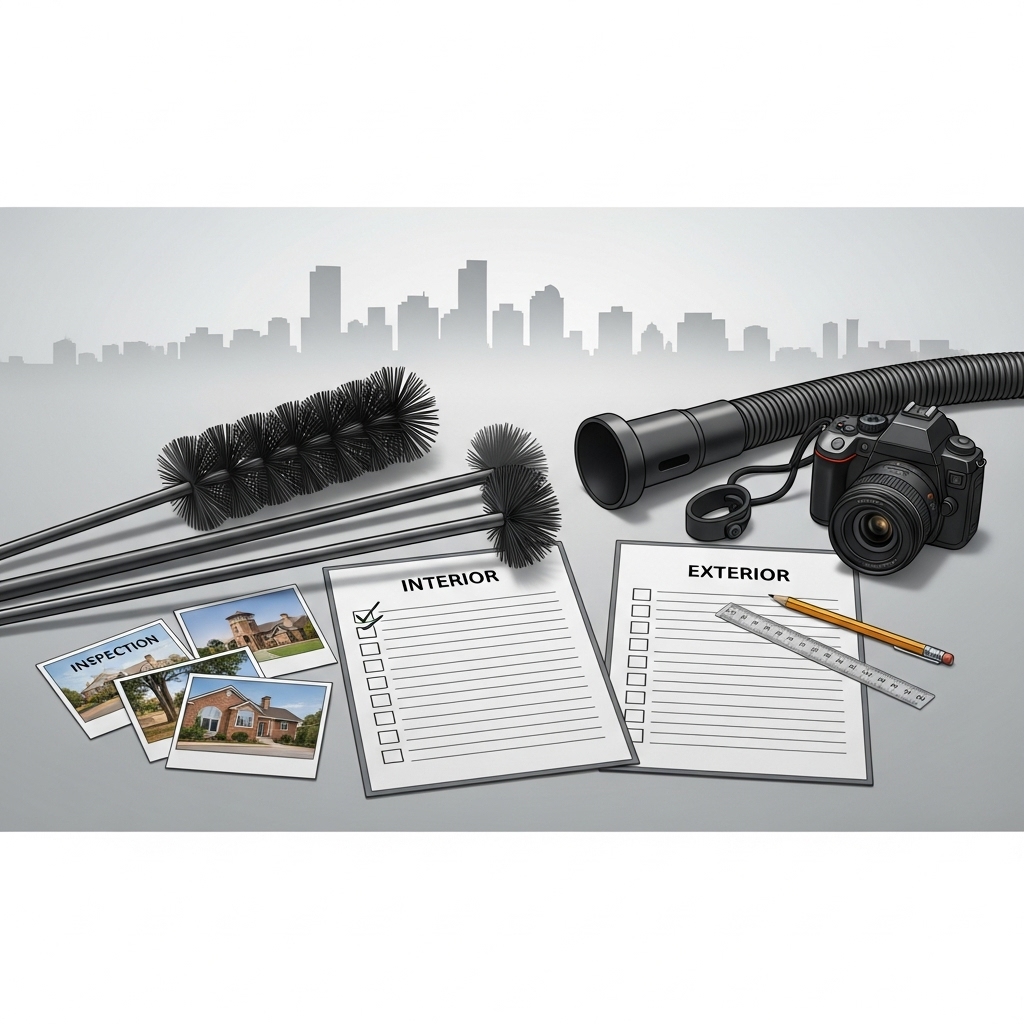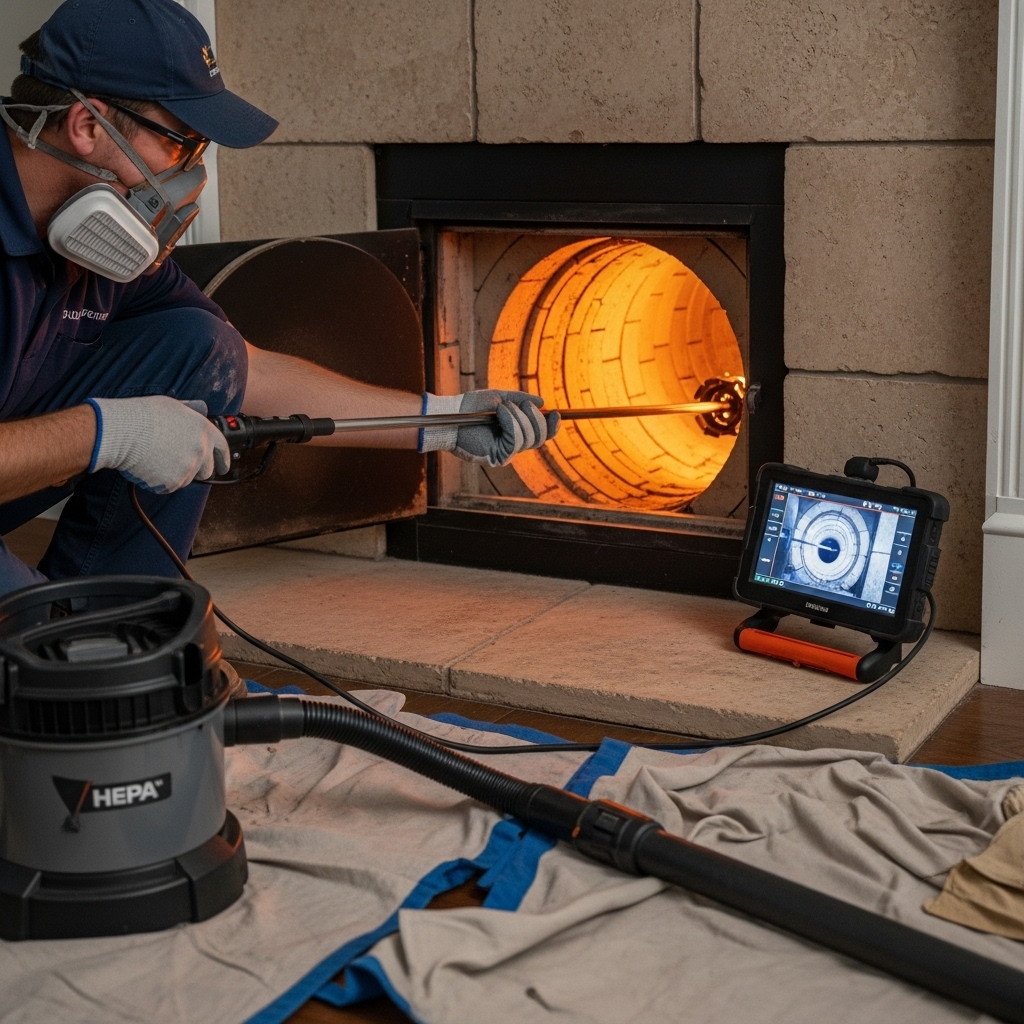
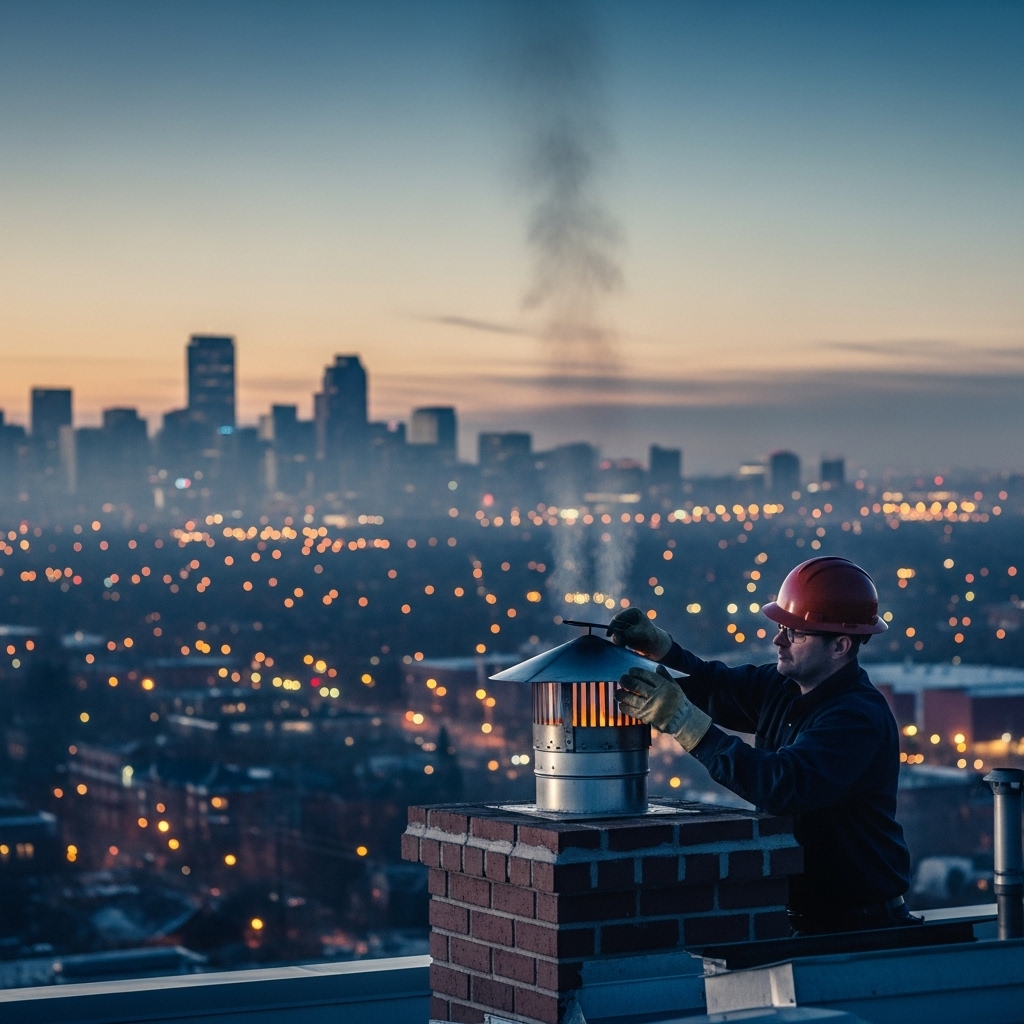
Denver’s skyline looks its best on cold, clear days when the air is crisp and the mountains stand sharp against the horizon. On other winter days, an inversion settles over the city and traps pollutants close to the ground. In those conditions, every source of emissions matters, including the way residential fireplaces and stoves vent. A professional chimney inspection is one of the most effective ways to reduce visible smoke and fine particulates from your home while also improving the way your fireplace or stove performs. The benefits reach beyond your living room: cleaner burns, fewer odors, and less contribution to those gray inversion layers we all notice. If you want to start the season on the right foot, make time for trusted chimney inspection services before your first long stretch of fires.
Draft is the engine that cleans up combustion
Efficient burning depends on steady, predictable draft. Draft pulls oxygen to the fire, carries exhaust up and out, and keeps smoke from rolling into the room. When the path is smooth and the pressure balance in the home favors upward flow, you get bright flames and less visible smoke both at the chimney top and in the firebox. An inspection evaluates the factors that determine draft quality: cap condition and sizing, termination height relative to the roofline, liner continuity and size, smoke chamber smoothness, and damper function. By tuning these, inspectors reduce turbulence and resistance, which means the fire consumes more of its fuel and leaves fewer unburned particles to become smoke.
In Denver, where wind patterns can change over a single block, termination height and cap design are critical. If the chimney is too short relative to nearby ridges or roof elements, winds can create pressure zones that push exhaust back down. A properly sized cap with spark arrestor mesh guards against downdrafts caused by gusts and keeps animals from building nests that choke the flue. These may sound like small details, but in aggregate they have an outsized effect on emissions because they keep the pathway open and the flow stable.
Creosote: both symptom and cause
Creosote is the sticky or shiny byproduct of incomplete combustion. It forms when wood gases cool and condense on flue walls, especially when fires smolder or when the flue is cold. As creosote accumulates, it roughens the interior surface of the flue, raising resistance and slowing exhaust. That slower exhaust, in turn, encourages even more condensation and smoke. An inspection identifies how much creosote has accumulated and why. The remedy is twofold: remove existing deposits and address the conditions that created them. Sometimes that means coaching on burning fully seasoned firewood and establishing hotter startup fires. Other times it means smoothing a rough smoke chamber, repairing a broken damper, or improving make-up air in a tight home so the fireplace is not competing with a powerful range hood.
Gas appliances and invisible emissions
Gas fireplaces and inserts do not produce the visible plumes associated with wood, but emissions still matter. If a gas appliance vents into an oversized flue, the cooler exhaust can slow and condense, carrying acidic compounds that corrode metal and masonry. Corrosion narrows pathways, increases resistance, and can eventually create leaks that push byproducts into the home. An inspection ensures the liner is properly sized and continuous, that terminations are sound, and that carbon monoxide pathways are controlled. The result is not just cleaner venting but safer indoor air, especially during winter inversions when homes are buttoned up tight.
Smoke chamber tuning reduces room-side emissions
Many homes in Denver, especially older ones, have smoke chambers that were built with stepped, corbelled brick. Those steps are turbulence factories. As smoke leaves the firebox, it swirls and slows through the rough chamber, increasing the likelihood that it will spill into the room rather than move cleanly up the flue. Parging the smoke chamber smooth changes that dynamic. With a consistent, streamlined surface, exhaust flows upward with less resistance, which reduces smoke rollout and the odor that can linger in living spaces after a fire.
Pressure balance inside the home
Even a perfectly tuned chimney can struggle if the house itself is pulling the wrong direction. Modern homes are tight, and the combined effect of bath fans, range hoods, dryers, and even the stack effect in multi-level houses can create negative pressure at the fireplace. During inspection, we ask about when smoke spillage happens—only when the kitchen hood is on high, on windy nights, or randomly. Those clues point toward pressure interactions. Solutions range from simple operational changes, like cracking a window during start-up, to hardware tweaks such as installing a top-sealing damper that helps prime the flue by keeping the column of air warmer between fires. Each step reduces room-side emissions by giving exhaust an easier path upward.
Moisture control for cleaner burns
Water in the system is an enemy of clean combustion. A cracked crown that admits water or a cap that lets snow blow in will send moisture down the flue. Wet flue walls cool exhaust and increase condensation of wood gases, which leads directly to more creosote and smoke. An inspection checks the top-end defenses that keep things dry: crown slope and integrity, cap size and fit, and the seams of chase covers on metal systems. Keeping moisture out is not just about durability; it directly affects how cleanly your fires burn.
Right-sizing and relining
A mismatch between appliance and flue size is a common source of emissions. An open fireplace paired with a tall, wide chimney may draft acceptably despite inefficiencies. But when a modern insert or stove is connected to that same flue without a properly sized liner, the cooler, slower exhaust fails to carry all byproducts to the top. You see this as staining at the cap, odors on humid days, and sometimes smoke at the roofline that seems heavier than it should be. Relining with the correct diameter stainless steel reduces surface area, keeps exhaust velocity up, and limits condensation. The outcome is cleaner exhaust and better heat from the same amount of fuel.
Clean burning habits, guided by inspection
Homeowner habits matter. The inspection is a chance to align technique with the specific fireplace or stove you own. We advise burning seasoned wood with a moisture content around twenty percent or less, opening the damper fully during start-up to establish a strong draft, and avoiding loads of small, smoldering pieces that encourage smoke. We also discuss how often to remove ash, how to stage wood so early gases burn rather than condense, and how to operate air controls on stoves for secondary combustion. These tweaks are simple, but they make measurable differences in how much smoke your system produces both inside and outside.
Measuring improvement you can see
One advantage of chimney work is that progress is visible. After an inspection-driven tune-up—cap adjustments, smoke chamber smoothing, damper repair, and a cleaning—you will notice brighter fire, less odor, and less haze at the roofline. In neighborhoods prone to inversions, that improvement is not just personal comfort; it is a small contribution to better community air on the days we need it most.
Seasonal timing for the best results
Pre-season inspections set you up for a clean winter. Mid-season checks are helpful if you notice changes, like new smoke spillage or odors that were not there in December. Post-season inspections identify what the winter left behind so repairs and improvements can be scheduled before summer thunderstorms and hail. At each stage, the goal is the same: reduce resistance, control moisture, and set the system up for clean, efficient exhaust.
For many homeowners, the biggest gains come from combining simple behavior changes with one or two targeted fixes. A new cap and a parged smoke chamber, for instance, can transform a smoky, reluctant fireplace into one that lights easily and burns cleanly. When paired with consistent, professional chimney inspection services, those incremental improvements add up to a noticeable reduction in emissions year after year.
Frequently Asked Questions
Can an inspection really reduce visible smoke?
Yes. By clearing obstructions, smoothing rough internal surfaces, ensuring proper cap and damper function, and aligning flue size with the appliance, inspections address the root causes of smoke. The result is cleaner combustion and less visible exhaust at the roofline.
What if my fireplace always smoked a little—can that be fixed?
In many cases, yes. Chronic smoke often traces back to smoke chamber turbulence, a short termination relative to the roof, negative pressure in the home, or an undersized cap. Each of these has a practical remedy that an inspection will identify.
Do gas fireplaces need this level of attention?
They do, though the signs are subtler. Inspections ensure proper vent sizing and continuity, confirm terminations are clear, and verify carbon monoxide safety. Cleaner venting reduces odors and keeps the system operating efficiently.
Will I need major work to cut emissions?
Not necessarily. Sometimes a careful cleaning, a cap upgrade, and smoke chamber parging are enough to yield big improvements. When relining is needed, it is usually because the appliance and flue are mismatched; the benefit is immediate and lasting.
How does Denver’s weather affect emissions?
Wind patterns, inversions, and rapid temperature swings all influence draft and condensation. Inspections tailor solutions—like adjusting termination height or improving moisture defenses—to local weather so your system stays stable and clean in all conditions.
How soon will I notice a difference?
Often immediately. Start-up is easier, flames are more lively, there is less odor, and the plume at the termination is smaller and disperses more quickly. Those are the signs of cleaner combustion and better draft.
Call to action
If you want brighter fires, cleaner indoor air, and a lighter footprint on inversion days, schedule expert chimney inspection services today. A focused evaluation will identify the small changes that deliver big reductions in smoke and emissions for your Denver home.