
When neighbors in Denver ask what really drives the cost of fixing a brick chimney, I always start with the same truth: every chimney tells a story written by weather, materials, age, and use. In a city that swings from bright, arid summer afternoons to snow-driven nights and sudden Chinook warm-ups, brick chimneys live a tough life. The freeze-thaw cycle here is relentless, and as a local who has spent years around historic bungalows in Baker, tidy ranches in Virginia Village, and stately homes in Park Hill, I’ve seen nearly every scenario. Talking about money without context leads homeowners astray; instead, understanding the condition of the masonry, the complexity of access, and the scope of the needed work paints a far clearer picture. If you are beginning to explore options for chimney repair, it helps to learn how each factor contributes to the overall project.
Denver’s altitude and climate are the invisible forces that shape many chimney issues. In winter, moisture that seeps into brick and mortar expands as it freezes, then contracts as it melts, opening micro-cracks into visible gaps. On sunny days, UV exposure dries the outer surface quickly, leaving the interior moisture to migrate and bring salts to the surface, forming efflorescence. Over time, this dance erodes the binder in older mortars and can cause spalling, where the brick face flakes off. When homeowners wonder why one chimney needs a modest tune-up and another requires more extensive work, the answer is often found in these weather patterns and how long small problems were allowed to linger.
How brick type and mortar composition influence the project
Not all brick is created equal, and the style of a Denver home often hints at what lies above the roofline. Many pre-war homes used softer, more absorbent brick paired with lime-rich mortar that was intentionally sacrificial, meaning it would weather before the brick. Newer homes often rely on harder, denser brick and mortar blends that stand up better to the elements but can transfer stress to adjacent components. Matching the original materials matters not only for appearance but also for performance. Using an overly hard mortar to repoint a soft-brick chimney can trap moisture and speed deterioration. That’s why assessing the original materials is an early step; the right match tends to extend longevity and avoid creating new problems while solving old ones.
Mortar joint profiles also play a role. The depth, tooling, and finish of the joints affect how water sheds from the chimney face. Weathered or recessed joints invite moisture, while properly tooled joints encourage shedding. In some cases, repointing a limited area with a compatible blend may be all that’s needed to restore integrity. In other instances, deteriorated joints wrap around the stack, and a more comprehensive approach makes sense. The conversation always begins with a careful inspection of mortar soundness, joint depth, and how those joints interact with surrounding brick.
Chimney crowns, caps, and the water story
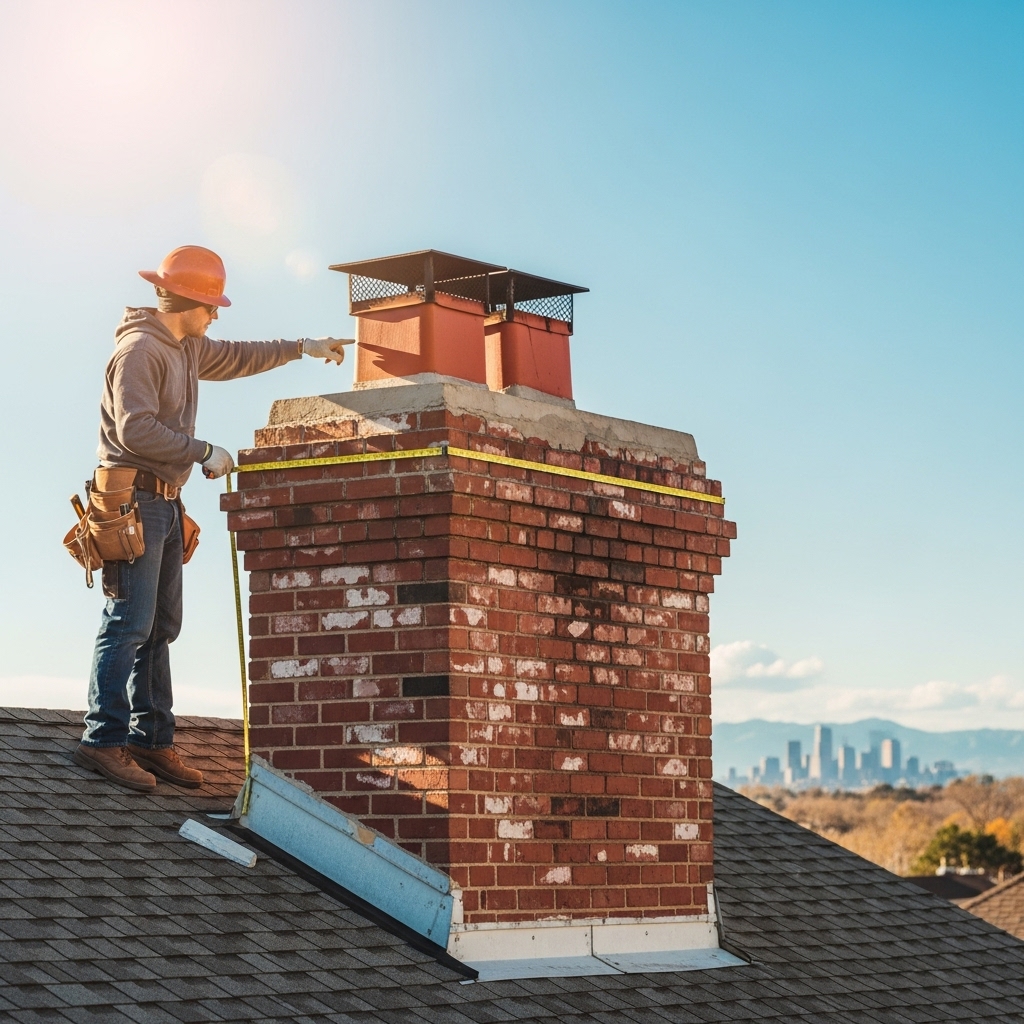
One of the most underestimated elements in a Denver chimney is the crown—the concrete or mortar cap atop the stack that should slope to shed water. A crown with hairline cracks will accept water, freeze, and then open those cracks a little wider each season. Add wind-driven snow and spring storms, and the crown becomes a primary water entry point. A properly designed crown includes a drip edge to divert water away from the vertical brick below, and it should have expansion accommodation around flue liners. When those design cues are missing, moisture trickles down, showing up as stained masonry, musty odors, or dampness in the chase.
Then there’s the cap: a metal or stone lid over the flue with a screen to keep animals out and embers in. In open neighborhoods near greenbelts or the foothills, birds and small mammals love the shelter a cap offers, and they will test your patience and your chimney’s draft if they gain entry. A quality cap reduces the likelihood of debris buildup and protects the liner mouth. Evaluating both crown and cap is central to predicting the scope of work, because water management—from the very top—determines how much of the structure below stays sound.
Flashing, counterflashing, and the roof interface
Many homeowners are surprised to learn that chimney leaks are often roof leaks masquerading as masonry issues. Where the chimney meets the roof, flashing and counterflashing must be installed with care so wind, rain, and snowmelt don’t settle into that joint. Denver’s gusty afternoons and winter melt patterns test any weak spot. If the flashing system is aged, improperly lapped, or sealed with short-lived caulks instead of durable, mechanical solutions, moisture can travel behind the brick and show up inside the home far from the source. Assessing the metalwork at this interface is as important as checking the brickwork itself.
Roof pitch and height also matter for planning. A steep roof or a chimney located near the ridge may require specialized access, protection of surrounding shingles, and secure tie-offs. On older clay tile or slate roofs found in some historic districts, methods must be adapted to avoid damage. All of these practical considerations—access, safety, and protection—are part of determining the scope of a chimney project and shape the timeline of the work.
Inside the stack: flue, smoke chamber, and damper realities
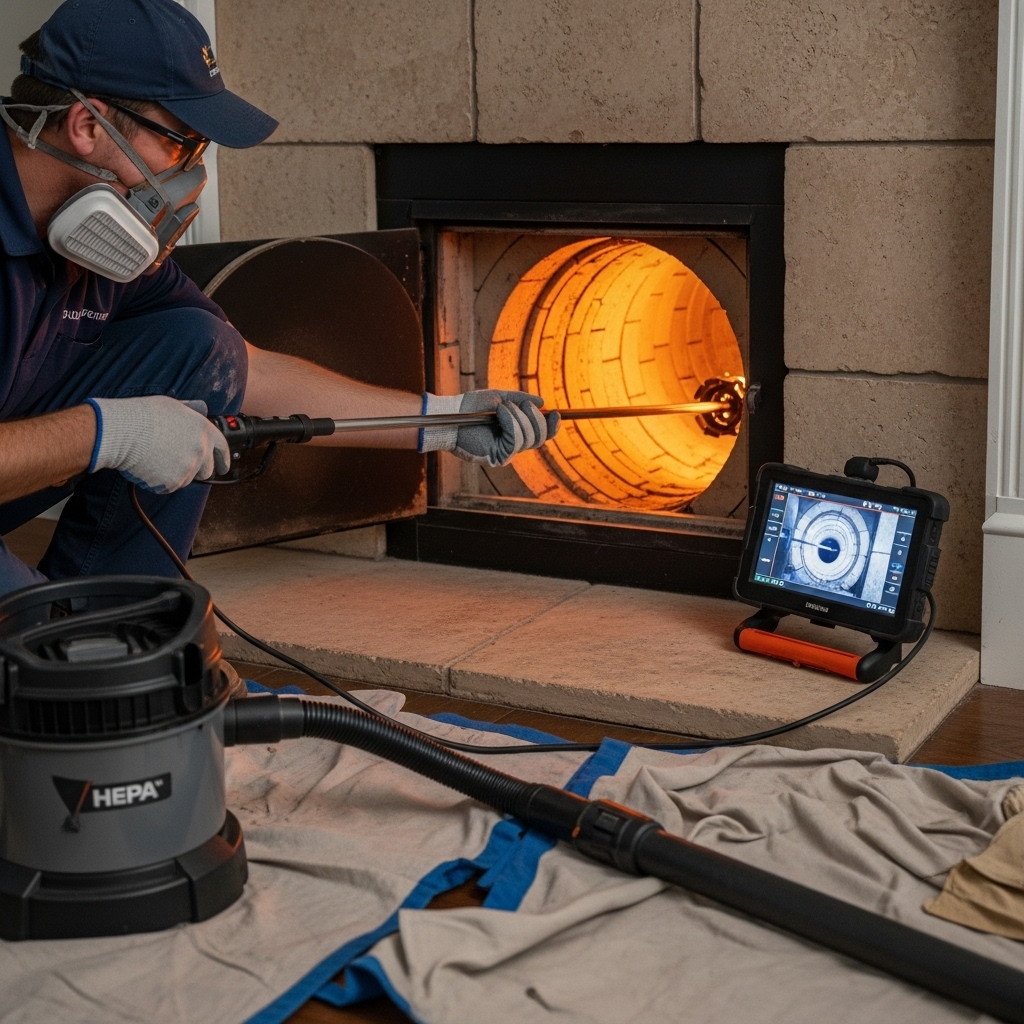
The flue liner is the chimney’s inner highway, guiding smoke and gases safely out of your home. Clay tile liners, common in older Denver homes, can crack from thermal shock or from minor settlement. Stainless steel liners, more typical in modern retrofits, withstand stress differently but must be sized and installed correctly for the appliance they serve, whether that’s a wood-burning fireplace insert or a gas furnace. If the liner is compromised, it affects draft, efficiency, and safety. A thorough camera inspection tells the truth no flashlight can, revealing the condition of joints, tile faces, and transitions.
Below the liner, the smoke chamber and smoke shelf funnel combustion byproducts up into the flue. Rough surfaces and gaps create turbulence that hurts draft and encourages creosote accumulation. Parge-coating the smoke chamber to smooth irregularities and sealing gaps contributes to better performance and safety. Meanwhile, dampers—whether old cast-iron throat dampers or newer top-sealing models—play a crucial role in keeping conditioned air inside when the fireplace isn’t in use. Each of these components has its own maintenance and repair profile, and the overall plan depends on how they work together.
How inspection shapes the plan for brick homes
In Denver’s brick homes, minor cracks, missing mortar, or slight out-of-plumb conditions can look cosmetic at first glance yet hint at deeper patterns. Perhaps the stack was originally built with softer brick and has weathered from decades of service. Maybe the crown is flat and has long held puddles that seep. Or the home settled ever so slightly, stressing certain mortar joints. A comprehensive inspection considers the chimney as a system, not a patchwork of parts. The exterior, interior, and the way the chimney connects to the roof all matter. Documented photos, close readings of the mortar’s condition, and a plan that prioritizes water shedding and structural soundness tend to yield the best results.
Midway through many projects, homeowners are relieved to learn that strategic repairs can prevent more complex work later. Targeted repointing, crown rebuilding with proper slope and overhang, and thoughtful updates to flashing can transform a leaky, weathered chimney into a sturdy, reliable part of the home’s envelope. If you’re evaluating next steps and want to compare options for Denver chimney repair, remember that the most effective plan aligns material compatibility, weather realities, and safe venting performance.
Historic charm and neighborhood character
From Congress Park to West Highland, Denver’s blocks are a patchwork of eras. Chimneys from different decades carry the character of their time—distinct brick sizes, corbeled shoulders, decorative bands, and ornate clay pots. Preserving that character while improving performance is often possible with the right approach. Matching brick color and texture, echoing original joint profiles, and respecting the line of the stack ensures the repair blends gracefully with the home. In historic districts, approvals and gentle methods may be part of the process, especially when working near fragile roof materials or delicate trim.
Even where homes are not designated historic, many owners value the visible integrity of their chimney because it anchors the facade. A well-executed repair should be nearly invisible from the street, leaving only the impression that the home is cared for and weather-ready. Attention to detail shows up in the neatness of the joints, the sound of a firmly set cap, and the way water now beads and leaves the surface rather than soaking in. These are the little wins that add up to lasting performance.
Seasonality and scheduling in Denver
Timing matters in a city with quick shifts from frost to warm sun. Mortar work and crown rebuilding both prefer certain temperatures and drying conditions. Planning ahead allows for optimal curing windows and avoids rushing repairs in the shadow of the first snowfall. The shoulder seasons—spring and early fall—are often ideal, but with the right protection and materials, successful work can be done throughout much of the year. The critical piece is allowing time for proper staging, careful removal of deteriorated material, and methodical rebuilding and sealing where needed.
Seasonal maintenance also keeps small issues from turning into disruptive projects. Addressing minor mortar loss before winter, clearing any debris near the cap, and verifying that flashing remains tight can stave off future, more extensive problems. Brick chimneys respond well to consistent, gentle care. In our climate, where sunny afternoons can be followed by a sudden freeze, the slow-and-steady approach keeps the system resilient.
Insurance, documentation, and peace of mind
While numbers should never drive the conversation without understanding, documentation certainly should. Clear photos, inspection notes, and a straightforward explanation of priorities help homeowners make informed choices. If your insurer has questions about water entry points or masonry deterioration, having a written record of conditions and completed work can make those conversations easier. It also establishes a baseline for future maintenance so you can track how materials are aging and where attention may be needed down the road.
For many Denver homeowners, the goal is confidence through the long season of fireplace weather. Knowing the crown will shed meltwater, the flashing is snug even in a downpour, and the liner is intact means cozy evenings without nagging worry. That’s the real value of a well-planned chimney project: living comfortably with your home’s character intact.
What to expect during a typical repair journey
Most projects begin with a thorough evaluation. From there, the plan may involve careful removal of loose mortar, cleaning and preparation of the joints, repointing with a compatible mix, rebuilding a crown with proper slope and drip edge, and sealing transitions where appropriate. If interior components need attention, smoke chamber smoothing and damper upgrades may be part of the sequence. Throughout, protection of landscaping and roof surfaces matters, as does respectful cleanup that leaves your property looking as tidy as it was before the work began.
Communication remains the thread that keeps everything clear. Homeowners appreciate knowing the sequence of steps, the reason behind each method, and what the finished result will accomplish. By aligning expectations with the realities of the site—access, weather windows, and any special considerations like historic detailing—projects proceed smoothly and the finished chimney earns its keep through many winters to come.
FAQ
How do Denver’s freeze-thaw cycles affect a brick chimney?
Moisture that enters small cracks expands as it freezes and contracts when it thaws, gradually prying joints apart and flaking brick faces. Over repeated cycles, this can turn hairline cracks into more visible gaps, destabilize mortar, and open pathways for water. Managing water at the crown, keeping joints well maintained, and ensuring the roof-to-chimney interface is sound are the best protections.
What signs suggest my crown needs attention?
Look for hairline to visible cracks on the crown surface, pooled water after a storm, or staining on the top courses of brick below. Inside the home, musty odors near the fireplace after wet weather can also point to crown issues. A properly sloped crown with a drip edge helps keep water off the masonry face and preserves the stack.
Can repointing alone solve my chimney issues?
Repointing solves problems in the mortar joints, but if water enters from the crown, around the flashing, or through a compromised liner, repointing alone won’t address those sources. A good plan looks at the entire system and targets every pathway where moisture or gases travel. Often, repointing is one part of a coordinated repair, alongside crown and flashing work.
How do I balance preserving historic character with performance?
Material compatibility and visual matching make it possible to protect the chimney while keeping its original look. Using mortar that suits the original brick, echoing joint profiles, and selecting brick that harmonizes with existing courses preserve character. Careful planning avoids harsh methods that might damage aged materials and ensures repairs blend naturally.
When is the best time of year to schedule work?
The shoulder seasons are often ideal for masonry curing, but with proper planning, quality work can happen throughout much of the year. Allow time for setup, curing, and weather contingencies so the finished work performs as intended. In Denver’s rapidly changing conditions, flexibility helps ensure success.
If you’re ready to discuss a tailored plan that respects the look of your brick home while addressing the realities of Denver weather, reach out to a local team that knows our neighborhoods and our climate. To explore options or schedule a thorough evaluation, contact pros who specialize in chimney repair services and understand what it takes to keep a chimney resilient season after season.