
When you heat a Denver home with a wood stove, you learn to read the seasons differently. Fall carries the fragrant hint of piñon and applewood, and the first skiff of snow sends everyone scrambling to stack cords and check flues. As a local professional who has spent years tending chimneys from Baker to Berkeley and up into the Front Range foothills, I’m often asked how to think about the investment in professional care for a wood stove. The question is natural, because the health of your flue and stove body influences comfort, efficiency, and peace of mind all winter long. From the unique fuels folks burn here to the effects of altitude on draft, Denver gives wood stoves a workout, and understanding what goes into service planning helps you make confident decisions. If you’re just starting to evaluate options, it helps to speak with a trusted chimney sweep who knows our neighborhoods, our weather, and our building styles.
Wood stoves are beautifully straightforward machines—simple in concept and complex in practice. They ask you to think about three invisible rivers moving through your home: air coming in, gases rising out, and heat lingering in the room. A clean, well-tuned chimney lets those rivers move the way they should. Creosote accumulation, soot, and even subtle restrictions in a connector pipe all nudge those flows off course, and you feel the effects immediately in a balky start, a smoky room, or logs that never quite catch. From a service standpoint, the time and care required to set that right depend on a matrix of details. Some belong to the stove itself—catalytic or non-catalytic designs, baffle condition, and door gaskets. Others live in the flue—liner type, offsets, and termination height. Still others belong to the home: roof pitch, access, and exposure. In Denver, where sun-baked shingles sit a few days away from snow and ice, good planning simply respects the environment.
Why Denver’s Air and Altitude Matter for Wood Stoves
At elevation, the thinner air changes how any fire breathes. Draft depends on the temperature difference between the flue gases and the outside air, as well as on the height and continuity of the vent. On crisp winter nights along the South Platte, the outside air is frigid enough to encourage strong draft, but the start-up period can still be temperamental because your chimney is cold-soaked from the day. It takes a couple of minutes to warm the flue enough to establish a stable column of rising gases. That’s one reason local homeowners learn little rituals—opening a nearby window a crack to relieve house pressure, pre-warming the flue with a small kindling fire, and keeping seasoned wood within arm’s reach. These habits reduce the strain on your system and shape the cadence of your service needs over a season.
Altitude also affects appliance tuning. Catalytic stoves rely on a honeycomb combustor to re-burn smoke and boost efficiency. If you’ve ever noticed a catalytic probe lagging or a combustor taking longer to engage on a frigid morning, it might be a sign that the pathway is partially obstructed by fly ash or fine soot. Non-catalytic designs use air tubes and baffles to mix secondary air with smoke and burn off more particulates. When those components are dirty or cracked, the stove works harder to deliver the same heat, and you begin to see telltale clues: glass that clouds quickly, stubborn coals, or a stove that wants more frequent reloads.
What Shapes Service Planning for Wood Stoves in the Mile High City
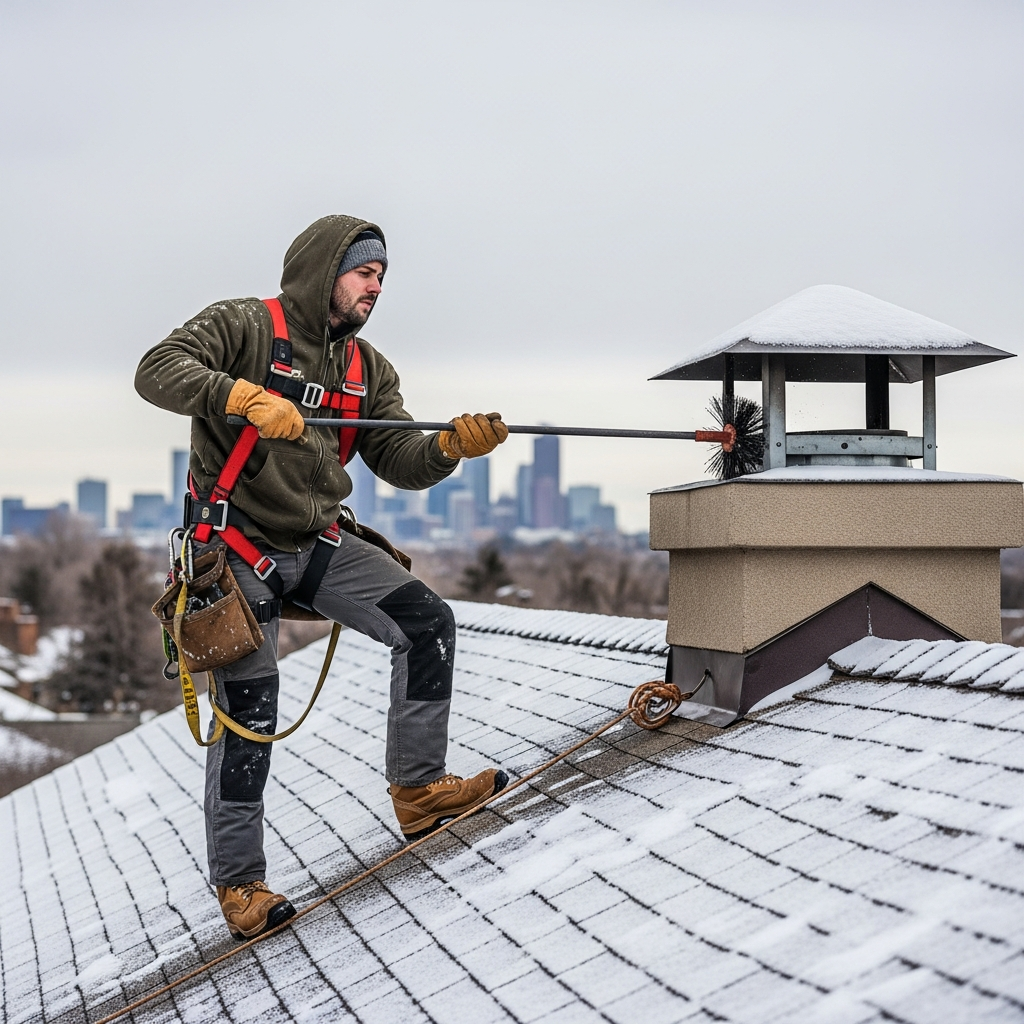
When we talk through your wood stove’s maintenance plan, we begin with a tour of the home. Every house in Denver tells a story with its roofline. A snug bungalow near Washington Park, a century-old brick in Capitol Hill, or a contemporary build in Stapleton all present different paths to the cap. We consider ladder placement, roof pitch, the chimney’s height above the ridge, and prevailing winds that may move embers in winter storms. It’s not just logistics; it’s safety for the crew and integrity for your roof.
We then study your flue system. Many Denver wood stoves vent into insulated stainless liners that run through existing masonry chimneys. Others use factory-built, double- or triple-wall metal chimneys that exit through a wall or the roof. Each configuration influences how creosote condenses. A liner with a slight offset might collect more deposits at the bend; a cold exterior masonry chimney tends to build heavier glaze in the shoulder seasons when fires are smaller and smolder longer. A thorough service plan accounts for these tendencies and ensures the right tools are at hand, whether that’s poly rods and gentle rotary brushes for stainless steel or traditional wire-bristle tools for unlined masonry above a listed thimble.
The stove body itself deserves a careful check. Door gaskets compress over time, leading to air leaks that make a stove race even with the air control turned down. Ash lips and firebrick can crack. Air tubes wear. Catalytic combustors need periodic evaluation for cracking, plugging, or warp. These are not dramatic problems when caught early; they are simply the normal patina of use through many winters. During a visit, we confirm measurements, inspect baffles, and note any parts that should be replaced ahead of the deep cold so you never have to pause mid-season.
Seasoned Fuel, Storage Habits, and Their Quiet Influence
The most overlooked factor in wood stove performance is fuel. Along the Front Range, homeowners burn a mix: urban tree trimmings from ash or maple, beetle-kill pine from the high country, or purchased hardwood when they can find it. Moisture content shapes everything. Wood that sits on bare ground wicks water; stacks without a top cover soak up spring storms; and splits that are too large dry slowly even in our arid climate. When wood arrives at a stove above about the moisture level that seasoned fuel carries, it produces more smoke and cools the flue gases. That steeper drop invites creosote, and the cycle accelerates. Good storage—elevated off the ground, top-covered, ends open to the breeze—pays for itself in clean burns and less stress on your chimney’s interior.
Another quiet influencer is how you run the stove day to day. Quick, hot starts followed by steady secondary burn give your chimney a healthier diet than extended smoldering. Small loads shoulder-season are fine when the evening dips, but it helps to give the flue occasional hotter fires to keep things clean. These habits don’t replace professional care, but they reduce the amount of material that needs to be removed when the time comes, and they help you get the most from every piece of wood.
Inside a Professional Wood Stove Service Visit
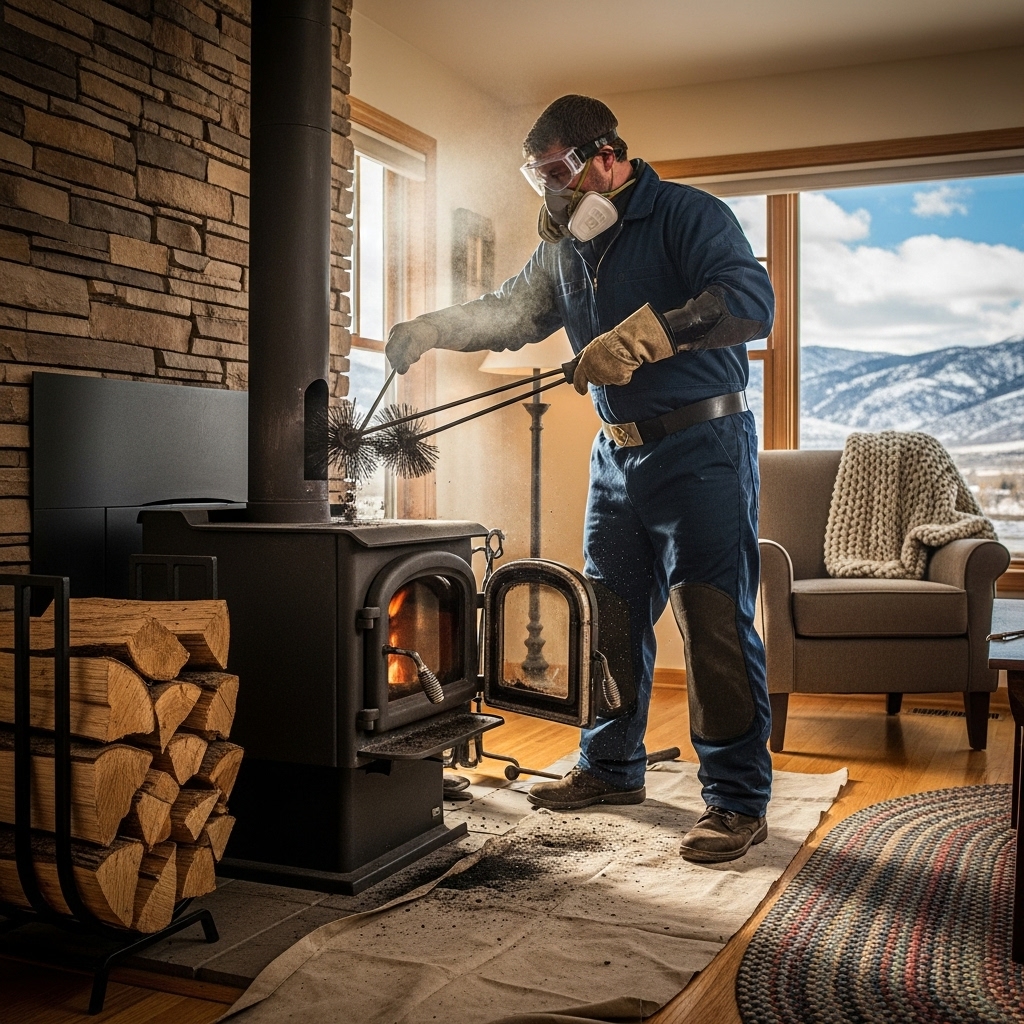
Homeowners like to know what happens during a visit. The short answer is: more than soot removal. After a brief walk-through and a check of the exterior termination, we protect the hearth and surrounding area. Containment matters in city homes with pale rugs as much as in mountain cabins with rough-sawn floors. We typically sweep from the bottom for wood stoves, which allows us to keep a vacuum attached to the connector while we work and to control fine particulates. For systems with easy roof access and a particular cap design, we may also sweep from the top and then chase the fine material down to a vacuum capture point. Flexibility is the point; the goal is a clean system and a clean room.
We break down the stove components that should be removed for a thorough job: baffles come out carefully, air tubes may be eased aside, and the combustor housing is inspected where applicable. That’s when you get the clearest picture of how your stove has been burning. We look at patterns in the soot—powdery gray suggests good combustion, while shiny flakes hint at smoldering cycles. The connector pipe gets special attention because it is the flue’s first stretch and often the dirtiest. We check for lock seams starting to open, evaluate clearances to combustibles, and confirm the condition of heat shields.
Camera inspection is a standard part of the visit when a visual from the appliance or roof isn’t sufficient. In older masonry chimneys serving wood stoves, we look for cracked or missing clay tiles, gaps in mortar joints, or signs of moisture intrusion. In insulated liners, we check for abrasion and confirm that seams are aligned. Documenting these findings with photos gives homeowners a clear record and guides any future work, whether that is a simple cap upgrade or a liner repair.
Timing Your Service Around Denver’s Seasons
Denver’s rhythm invites a simple calendar. Late summer through early fall is the perfect window to prepare for heating season. Crews can access roofs more safely before snow, parts supply is predictable, and you can build a few early fires without thinking about when you’ll need a mid-season visit. That said, life happens, and stoves are forgiving. If you’ve burned through most of the winter and now see signs that your chimney needs attention—sticky damper, stronger smoke smells, or glass that blackens quickly—we can step in mid-season and get you back to enjoyable fires right away.
It’s also smart to consider shoulder-season service in spring. Once the last fire burns out, a final sweep removes acidic residues that might otherwise sit in a humid flue during our wettest months. For homeowners who burn daily in winter, this post-season visit often dovetails with gasket replacements or combustor checks so you start next season ahead of schedule.
Wood Stove Nuances in Different Denver Neighborhoods
The character of the neighborhood often shapes the chimney story. In older brick homes, we regularly see original masonry chimneys that now serve modern stoves via stainless liners. The exterior portions of those stacks endure high temperature swings, and the junctions where a liner connects to a top plate or a thimble deserve attentive inspection. In mid-century homes with low-slope roofs, chasing a flue through a soffit requires a careful eye on clearances. In new builds, factory-built chimneys perform beautifully when installed to spec, but even they benefit from periodic confirmation that support brackets are tight and terminations are well screened against wildlife.
The foothills add wind into the equation. Gusts sweeping down from the Divide can challenge draft and test caps. A directional cap or a taller termination sometimes tames that turbulence. In city settings, nearby buildings can create eddies that behave like constant crosswinds. We evaluate these patterns as part of any service visit so that a simple hardware upgrade can dramatically improve day-to-day use.
Communication, Documentation, and Peace of Mind
Beyond the physical work, homeowners appreciate clarity. After a visit, we walk through findings in plain language and send a written summary with photos. If we notice early wear on a baffle, lightly warped air tubes, or a cap whose screen is beginning to corrode, you learn about it before it turns into a midwinter surprise. If everything looks excellent, you have that confirmation in writing as well. For property managers and landlords, this documentation is a comfort when coordinating use across multiple residents.
When families gather around a wood stove, they bring stories with them. The stove becomes the anchor for snow-day breakfasts, holiday evenings, and quiet nights listening to the wind shake the windows. Professional care is simply the invisible scaffolding that keeps those moments easy and safe. In a city that values both heritage and innovation, a well-maintained wood stove honors the old ways while taking advantage of modern materials and techniques.
When a Tune-Up Becomes an Upgrade
Sometimes a service visit becomes the catalyst for small improvements that pay off in everyday comfort. If a stove regularly back-puffs on start-up, the answer might be as simple as adjusting the way the house breathes—adding a dedicated outside air kit in tight homes or altering make-up air pathways. If smoke curls at the cap on gusty afternoons, a different cap design might smooth the airflow. If the glass darkens quickly, new door gaskets and a careful re-seating of the glass can restore the clean-window fire you remember. These refinements don’t change the essence of your stove; they let it show its best self.
On rare occasions, a discovery inside the flue demands a more significant fix. Older masonry stacks may show tile fractures or missing sections. We discuss the options in a straightforward way, balancing safety, durability, and how you use the stove. The point is to offer a path that keeps your home warm and your mind at ease throughout the long Denver winter.
Midseason Check-Ins and How to Read Your Stove’s Signals
Homeowners often ask how to know when to schedule care if they burn more than expected. The stove offers subtle signals. If the air control no longer has the same range it used to, if you hear a faint rumble that wasn’t there before, or if the stovepipe’s color deepens around seams, those are cues to call. A whiff of smoke on start-up where there used to be none, or a faint tar-like odor near the stove on warm afternoons, also suggests it’s time to take a look. You never need to wait for a dramatic symptom; a quick conversation can save you a weekend of frustration.
During these midseason moments, a trusted partner matters. In the middle of winter, schedules compress, weather complicates roof access, and you want straightforward guidance. That’s where a seasoned Denver team with deep neighborhood knowledge makes a difference. If you need a recommendation or a second opinion, a conversation with a local chimney sweep can help you choose the right timing and approach for your situation.
FAQ: Wood Stoves and Chimney Care in Denver
How often should a wood stove chimney be professionally tended in Denver?
Usage patterns matter more than the calendar, but as a baseline, most homes benefit from at least an annual visit. Daily burners during cold snaps or households using softer woods may prefer a midseason check as well. The goal is to keep combustion clean and the flue interior free of significant accumulation.
What are the signs that my wood stove needs attention?
Look for slow starts, smoky rooms, a damper that sticks, darkened glass that won’t clear with normal burning, or noticeable odors on warmer days. Any of these can suggest accumulation in the flue, gasket wear, or a cap that needs cleaning.
Does burning hardwood versus softwood change maintenance needs?
Seasoned hardwoods produce longer burns with stable coals, while softwoods tend to ignite quickly but can encourage more frequent reloads. Either can burn cleanly if properly seasoned, but softer woods often amplify the need for attentive technique to avoid smoldering. Your storage practices and burn habits make the bigger difference.
Is a catalytic wood stove harder to maintain than a non-catalytic model?
Not necessarily. Catalytic stoves ask you to monitor the combustor’s condition and keep pathways clear of fly ash. Non-catalytic stoves rely on air tubes, baffles, and a precise air wash over the glass. Each design rewards periodic inspection, and both can deliver efficient, beautiful fires when maintained.
What role does the chimney cap play for wood stoves in Denver?
A good cap keeps out animals and precipitation while shaping airflow at the top of the flue. In windy corridors near the foothills, a directional or specially baffled cap can smooth turbulence. Caps also protect screens from clogging with soot and keep embers where they belong.
Can I do any maintenance myself between professional visits?
You can support your system by burning seasoned wood, cleaning the glass with stove-safe methods, and keeping the area around the stove tidy. Visual checks of the cap from the ground with binoculars after storms are helpful. Leave internal flue work, component removal, and diagnostic inspections to trained professionals.
Why does my stove sometimes back-draft on mild days?
On days when indoor and outdoor temperatures are closer, draft weakens. If the house is under negative pressure from kitchen or bath fans, the stove may struggle to establish flow. Pre-warming the flue and easing back on exhaust fans usually helps.
Will a new liner change how my stove burns?
A properly sized, insulated liner often improves draft consistency and reduces condensation, which can improve performance and reduce accumulation. It can also simplify maintenance because deposits tend to be more predictable on a uniform surface.
When you’re ready to set up a visit or simply want to talk through what you’re seeing with your stove this season, reach out to a trusted local team. The right partner will answer questions in plain language, show up prepared for your specific setup, and leave your hearth cleaner than they found it. If you’d like guidance tailored to your home, connect with a Denver-area chimney sweep who understands our climate, our housing stock, and the way you actually use your fire when the mercury drops.